What Marine Diagnostics Actually Involves
When something feels off with your boat — a rough idle, unexpected power loss, or a warning light you’ve never seen before — marine diagnostic services are the systematic process technicians use to pinpoint exactly what’s wrong. Unlike guessing and swapping parts, professional diagnostics connect specialized scan tools to your vessel’s engine control modules, read live sensor data, and cross-reference fault codes against manufacturer specifications. The result is a precise answer, not an expensive guess.
Modern outboard and inboard engines are packed with sensors monitoring everything from fuel trim and throttle position to coolant temperature and oil pressure. Interpreting all of that data correctly requires both the right equipment and hands-on experience with marine-specific systems.
Why Boat Engines Demand Specialized Diagnostic Tools
Automotive scan tools don’t cut it on the water. Marine engines from brands like Mercury, Yamaha, Volvo Penta, and Mercruiser each use proprietary communication protocols. A technician needs brand-specific software — such as Mercury’s Verado diagnostic suite or Yamaha’s YDS system — to read live data streams, perform actuator tests, and clear codes properly.
Beyond the software, marine environments introduce corrosion, saltwater intrusion, and vibration that create failure patterns you simply won’t encounter on a car. An experienced marine technician knows, for example, that a lean fuel condition on a saltwater-used outboard often points to a corroded fuel connector rather than a failing injector. That kind of contextual knowledge saves boat owners significant money.
Common Problems Caught Early Through Diagnostics
Routine diagnostic checks — not just reactive ones after a breakdown — catch issues before they strand you offshore or cause catastrophic engine damage. Here are some of the most common problems a diagnostic session uncovers:
- **Throttle position sensor drift:** Causes hesitation or surging under load, often mistaken for a fuel problem.
- **Oxygen sensor faults:** Lead to poor fuel economy and increased emissions on four-stroke engines.
- **Overheating codes:** May indicate a failing impeller, blocked cooling passage, or thermostat issue — all serious if ignored.
- **Ignition timing errors:** Reduce power and can cause detonation that damages pistons over time.
- **Trim and tilt sensor failures:** Affect how the engine reads its own position, leading to erratic performance.
Catching any of these early — especially before a long offshore trip or the peak of boating season — is far cheaper than an emergency haul-out and repair.
What to Expect During a Diagnostic Appointment
A professional marine diagnostic appointment typically starts with a conversation about what you’ve noticed — when the problem occurs, under what conditions, and how long it’s been happening. That context helps the technician know where to focus first.
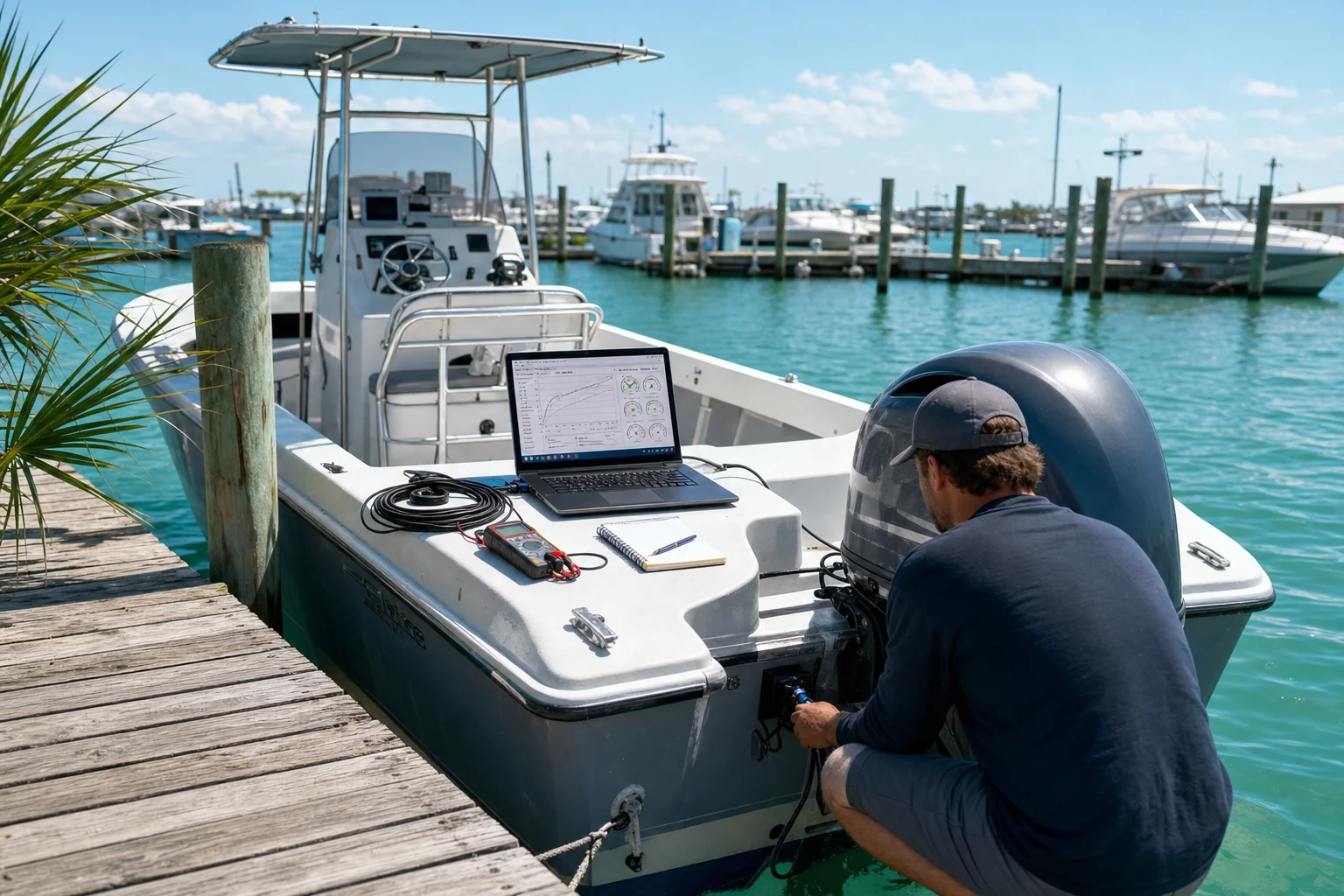
The technician then connects diagnostic hardware to the engine’s communication bus, usually via a dedicated port on the rigging harness or helm. They’ll pull stored fault codes, review freeze-frame data (which captures sensor readings at the moment a fault occurred), and often run the engine at various RPM ranges to observe live data in real time.
After the scan, a good technician walks you through the findings in plain language — what the code means, what caused it, and what the repair involves. You should leave with a clear written estimate before any work begins.
Choosing the Right Marine Diagnostic Provider Locally
Not every boat repair shop invests in current diagnostic software subscriptions or sends technicians to manufacturer training. When evaluating a local provider, ask a few direct questions:
- **Do you have brand-specific software for my engine make?** A shop that works exclusively on one brand may not be the right fit for your vessel.
- **Are your technicians factory-trained or certified?** Many manufacturers offer certification programs that indicate a meaningful level of competency.
- **Can you show me the diagnostic report?** Reputable shops provide a printout or digital copy of the fault codes and data they pulled.
- **Do you have a water test facility or access to a test tank?** Some faults only appear under load, so being able to run the engine under real conditions matters.
A local marine service business with strong community roots often has technicians who’ve worked on the same makes and models common in your area for years. That regional experience — knowing which issues are prevalent in local water conditions — is genuinely valuable.
The Bottom Line
Skipping diagnostics to save money almost always costs more in the long run. Replacing parts based on guesswork, missing an underlying issue, or suffering an engine failure mid-season are all outcomes that a proper diagnostic session helps you avoid. Whether you’re prepping for the season, troubleshooting an existing problem, or buying a used boat, investing in a thorough diagnostic check is one of the smartest decisions a boat owner can make.